

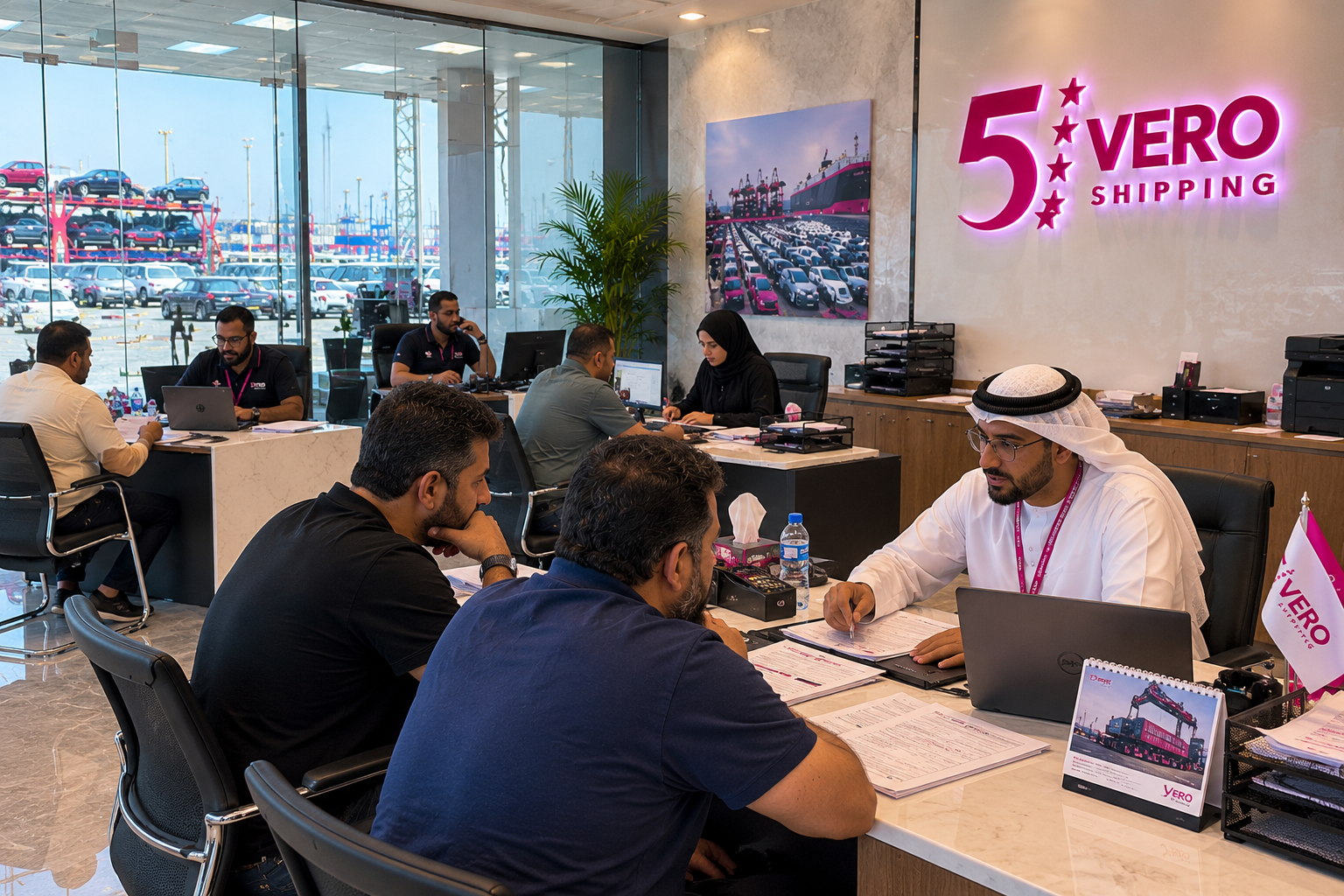
Where UAE Car Auctions Get Their Cars | Vehicle Sourcing & Supply Chain
18 Oct 2026
When buyers walk through a car auction in Dubai, Sharjah, Ajman, Abu Dhabi, or another part of the United Arab Emirates, they usually see the final stage of a much larger automotive supply chain.
Hundreds of vehicles may be lined up for inspection and bidding: family sedans, SUVs, pickup trucks, luxury vehicles, commercial vehicles, damaged cars, fleet vehicles, repossessed vehicles, imported cars, and vehicles prepared for resale or export.
But where do all these auction cars actually come from?
The answer is more complex than many buyers realize.
A UAE car auction does not necessarily depend on one source of inventory. Vehicles can enter the auction system from rental fleets, dealerships, banks, insurance-related channels, government or corporate fleets, private sellers, trade-in networks, overseas suppliers, vehicle traders, and international automotive markets.
Understanding these sources is important not only for auction buyers but also for businesses planning to operate or supply a vehicle auction.
At VERO Shipping, automotive logistics connects many of these stages. Vehicles may need to be collected from their original location, transported to a yard, imported into the UAE, stored, inspected, moved to an auction facility, sold, and then transported again to a new owner or prepared for international export.
This is the supply chain behind the auction lot.
---
## 1. Dealer and Trade-In Vehicles
One important source of auction inventory is the automotive dealership network.
Dealerships regularly receive vehicles through trade-ins when customers purchase newer cars. Some trade-in vehicles fit the dealer's normal used-car inventory and can be resold directly.
Others may not.
A dealership may receive a vehicle that is:
- Older than its normal retail inventory
- A different brand from its main business
- High mileage
- In need of repairs
- Slow-moving
- Better suited to wholesale buyers
- More attractive to exporters than local retail customers
Instead of keeping these vehicles for long periods, dealers may sell them through wholesale channels or auctions.
This creates a continuous flow of vehicles between dealerships, traders, auctions, exporters, and logistics companies.
The UAE's position as a regional automotive trading center makes this especially important because a vehicle that is difficult to sell in one local retail segment may still be attractive to a buyer in another country.
Learn more about how the UAE functions as a vehicle trading and redistribution market through VERO’s guide to the UAE vehicle re-export market.
---
## 2. Rental and Leasing Fleet Vehicles
Rental and leasing companies operate large fleets that must be renewed continuously.
A rental company may operate hundreds or thousands of vehicles. As vehicles reach a certain age, mileage, maintenance stage, or fleet replacement cycle, the company may decide to remove them from active service.
Those vehicles do not simply disappear.
They can enter:
- Dealer networks
- Wholesale markets
- Fleet sales
- Direct business-to-business sales
- Vehicle auctions
This can create significant batches of similar vehicles entering the market at the same time.
For example, a fleet operator replacing part of its sedan inventory may release dozens of vehicles rather than selling them individually over several months.
For an auction operator, fleet relationships can therefore become an important inventory source.
For a buyer, understanding that a vehicle came from a fleet can also provide useful context when evaluating mileage, maintenance history, condition, and expected resale market.
---
## 3. Corporate and Commercial Fleets
Not every fleet vehicle belongs to a rental company.
Companies across the UAE operate vehicles for sales teams, technical staff, delivery operations, management, construction projects, field services, transportation, and other commercial activities.
When businesses renew these fleets, older vehicles need to be sold.
Depending on the company and number of units involved, vehicles may be sold individually, offered to dealers, transferred through wholesale channels, or sent to auction.
This category can include:
- Passenger vehicles
- SUVs
- Pickup trucks
- Vans
- Commercial vehicles
- Service vehicles
For auction businesses, developing relationships with fleet owners can create recurring inventory rather than depending only on individual sellers.
---
## 4. Bank and Finance-Related Vehicles
Financed vehicles represent another possible source of auction inventory.
When vehicles return to lenders or financial institutions through applicable recovery or settlement processes, those vehicles eventually need to return to the market.
Financial institutions generally are not automotive retailers. Their objective is normally to dispose of the asset efficiently through an appropriate sales channel.
Depending on the situation and applicable procedures, vehicles may therefore move through authorized dealers, asset-disposal companies, wholesale networks, or auctions.
From a logistics perspective, these vehicles still require physical coordination.
They may need collection, yard transportation, temporary storage, inspection, inventory control, and delivery to the eventual buyer.
That physical movement is an important part of the vehicle supply chain even though the financial transaction receives most of the attention.
---
## 5. Insurance and Damaged Vehicles
Some auction inventory comes from insurance-related channels.
After an accident, flood event, fire, theft recovery, or other loss, a vehicle may be evaluated according to the applicable insurance and legal process.
Vehicles that eventually become available for sale can attract:
- Repair workshops
- Spare-parts businesses
- Rebuilders
- Vehicle traders
- Exporters
- International buyers
However, damaged vehicles create additional logistics considerations.
A vehicle may not start.
It may have damaged suspension.
Its wheels may be locked.
It may not steer correctly.
It may require special loading equipment.
These details matter before transportation begins.
VERO explains why physical condition affects transportation in its guide to how vehicle pickup works before international shipping.
---
## 6. Government and Institutional Fleets
Government departments, municipalities, public organizations, and large institutions can also replace vehicles periodically.
Depending on the organization and applicable disposal procedures, surplus vehicles may eventually enter auction or other approved sales channels.
These vehicles can range from ordinary passenger cars to SUVs, pickups, vans, and specialized vehicles.
This source is particularly interesting for professional auction operators because institutional disposal may involve multiple units rather than one vehicle at a time.
A successful auction business therefore does not only ask:
**“How do we attract buyers?”**
It should also ask:
**“How do we build reliable channels that continuously supply vehicles?”**
Without inventory, there is no auction.
---
## 7. Private Sellers
Individual owners are another source of vehicles.
Some private sellers want a fast sale rather than spending weeks advertising a vehicle, answering calls, arranging inspections, negotiating prices, and meeting multiple potential buyers.
An auction or wholesale channel can provide another route to market.
Private vehicles may also enter the supply chain through dealers or professional traders before eventually appearing at auction.
Private transactions require careful attention to ownership documentation, vehicle identification, release authorization, and pickup information.
This is not unique to the UAE. VERO's U.S. operations regularly coordinate vehicles purchased outside traditional auctions as well. Our guide to shipping vehicles purchased from private sellers explains how this part of the supply chain differs from a standard auction purchase.
---
## 8. Vehicles Imported from the United States
International sourcing is one of the most important parts of the UAE automotive market.
The United States provides access to a huge range of vehicles through auctions, dealerships, fleet channels, wholesalers, and private sellers.
American inventory can include:
- Clean-title vehicles
- Salvage vehicles
- Luxury cars
- SUVs
- Pickup trucks
- Electric vehicles
- Hybrid vehicles
- Commercial vehicles
- Repairable vehicles
After purchase, however, the vehicle still has a long journey before it can appear in a UAE sales channel.
A typical supply chain may look like this:
**U.S. seller or auction → inland pickup → export facility → documentation → storage → container loading → U.S. port → ocean freight → UAE port → customs procedures → unloading → UAE yard → dealer or auction.**
For businesses sourcing American vehicles, the logistics chain should be considered before purchasing inventory.
VERO's first-time guide to shipping a vehicle overseas from the United States explains the major stages before international movement begins.
---
## 9. U.S. Auction Inventory
Copart, IAA, Manheim, and other U.S. vehicle channels are widely known among international automotive traders.
But purchasing the vehicle is only one part of the process.
After the auction transaction, the vehicle must be released and collected from the correct location.
Pickup timing can matter because leaving a vehicle at an auction facility longer than necessary may create additional costs.
For this reason, professional sourcing should connect purchasing decisions with transportation planning.
VERO discusses this issue in its guide to auction pickup deadlines, storage fees, and transportation delays.
---
## 10. Documentation Is Part of Vehicle Sourcing
A vehicle is not useful inventory simply because the purchase price is attractive.
The documentation must also support the intended movement and destination.
Before international sourcing, professional buyers should evaluate the VIN, ownership document, purchase invoice or Bill of Sale, title status where applicable, and export requirements.
A vehicle with an unusual document can create a completely different supply-chain challenge from a standard vehicle.
For UAE importers, VERO provides a detailed overview of documents UAE buyers may need when shipping vehicles from the USA.
Luxury and high-value vehicles can require additional attention when ownership documentation is unusual. See our guide to exporting luxury vehicles with title-related issues.
---
## 11. Storage Connects Purchasing With Shipping
Vehicle sourcing and shipping rarely happen at exactly the same moment.
A dealer may purchase one car today, another next week, and two more later in the month.
The vehicles may be located in different states or different facilities.
Some may already have complete documentation while others are waiting for titles.
That means temporary storage becomes part of the sourcing model.
VERO explains this stage in its guide to USA vehicle storage and secure handling for auction vehicles.
Businesses consolidating multiple purchases can also review VERO's vehicle storage policy at U.S. yards.
---
## 12. Vehicles Imported From Other International Markets
The United States is not the UAE's only international vehicle source.
Vehicles also enter the UAE from markets such as:
- Japan
- South Korea
- Europe
- China
- GCC countries
- Other international automotive markets
Different origins create different supply chains.
A Korean vehicle shipment may involve different exporters, ports, documents, vehicle specifications, and shipping arrangements from an American auction shipment.
European luxury vehicles may follow another route.
Chinese vehicles and electric vehicles may create different handling and carrier considerations.
This diversity is one reason the UAE has developed such a broad automotive ecosystem.
After vehicles arrive, professional unloading and handling become important before they continue toward dealers, storage facilities, showrooms, exporters, or auction channels.
VERO provides additional information about this stage in its guide to professional vehicle container handling in Sharjah Sajaa.
---
## 13. Local UAE Traders Can Also Supply Auctions
A vehicle does not need to arrive directly from another country to enter a UAE auction.
Local automotive traders constantly buy and sell inventory.
A trader may purchase vehicles in Dubai, move them to Sharjah, sell some locally, export others, and send slower-moving units into another wholesale channel.
This creates a secondary supply chain inside the UAE.
Vehicles can move between:
**Importer → trader → dealer → auction → new buyer → exporter.**
The same vehicle may therefore pass through several businesses before reaching its final owner.
Dubai plays a major role in this network. Businesses planning international resale can read VERO's guide to exporting vehicles from Dubai to international markets.
Abu Dhabi also contributes inventory through dealers, fleets, institutional vehicles, and local automotive businesses. More information is available in our Abu Dhabi vehicle export logistics guide.
---
## 14. Auctions Can Source Vehicles Specifically for Export Buyers
A UAE auction does not have to think only about domestic customers.
The UAE attracts automotive buyers from the Middle East, Africa, Europe, and Central Asia.
This means inventory can potentially be selected according to international demand.
For example, different markets may show stronger demand for:
- Affordable sedans
- SUVs
- Pickup trucks
- Luxury vehicles
- Repairable vehicles
- Hybrid cars
- Electric vehicles
- Commercial vehicles
Understanding the intended buyer base can help an auction operator develop a smarter sourcing strategy.
Instead of buying whatever inventory becomes available, the auction can gradually build supplier relationships around vehicle categories that match its buyers.
For businesses serving international customers, UAE re-export capability becomes a major advantage.
VERO explains how vehicles can continue from the Emirates to overseas destinations in its guide to complete vehicle export services from the UAE.
---
## 15. What Happens After the Auction Sources the Vehicle?
Once an auction obtains inventory, several operational stages may still be required before bidding begins.
Depending on the vehicle and source, these can include:
1. Vehicle collection
2. Transportation to the auction yard
3. Receiving and inventory registration
4. VIN verification
5. Condition inspection
6. Photography
7. Key identification
8. Document verification
9. Storage
10. Lot preparation
11. Online listing
12. Physical auction preparation
After the vehicle sells, another logistics chain begins.
The buyer may require local delivery, workshop transportation, storage, port transfer, container loading, or international shipping.
This is why vehicle auctions and logistics companies naturally interact.
The auction controls the marketplace.
The logistics network controls the physical movement of inventory.
---
## 16. Why Logistics Should Be Planned Before Vehicles Are Purchased
A common mistake in vehicle sourcing is to focus entirely on acquisition price.
A vehicle may appear inexpensive until the buyer calculates:
- Pickup cost
- Inland transportation
- Special handling
- Storage
- Documentation
- Loading
- Ocean freight
- Port expenses
- Customs procedures
- Local delivery
A low purchase price does not automatically mean a low landed cost.
The same principle applies to auction operators.
Before sourcing a large batch of vehicles, the business should understand where the vehicles are located, how they will be transported, how much storage is required, what documents are available, and where the vehicles are expected to go after sale.
VERO's guide to common mistakes made by first-time vehicle importers provides useful examples of why logistics planning should begin before shipping.
---
## 17. Building a Reliable Vehicle Supply Chain for a UAE Auction
For an auction company, reliable inventory is not created by one supplier.
A stronger model can combine several channels:
**Local sourcing**
- Dealers
- Trade-ins
- Rental fleets
- Corporate fleets
- Private sellers
- Institutional vehicles
- Automotive traders
**International sourcing**
- U.S. auctions
- U.S. dealers
- Private sellers
- Fleet suppliers
- Japan
- South Korea
- Europe
- Other international markets
The goal is to create a diversified supply network.
If one source slows down, the auction is not completely dependent on it.
At the same time, the logistics system must be capable of collecting vehicles from different origins and bringing them into one organized sales operation.
---
## 18. How VERO Shipping Fits Into the Auction Supply Chain
VERO Shipping is not the auction itself.
Our role is the logistics infrastructure surrounding vehicle movement.
Depending on the shipment, route, documentation, vehicle condition, and requested service, VERO can coordinate stages such as:
- Vehicle pickup
- U.S. inland transportation
- Auction vehicle collection
- Vehicle receiving
- Temporary storage
- Vehicle photography
- Export preparation
- Container loading
- Ocean freight
- UAE arrival coordination
- Container unloading
- UAE inland transportation
- Storage
- Port transfer
- International re-export
This means an auction company, dealer, trader, or professional buyer does not necessarily need to build every logistics function internally.
A specialized automotive logistics network can support the physical movement of vehicles while the auction business concentrates on sourcing inventory, attracting sellers, marketing vehicles, managing bidders, and completing sales.
Professional dealers importing inventory from the United States can also review VERO's guide to managing vehicle imports for UAE automotive businesses.
---
## 19. The Real Business Behind a Car Auction Is the Supply Chain
A successful car auction is much more than a website, bidding platform, auction hall, or parking yard.
Behind every vehicle is a supply chain.
Someone owned the vehicle.
Someone decided to sell it.
Someone collected it.
Someone transported it.
Someone checked its documents.
Someone stored it.
Someone prepared it for sale.
And after the auction, someone must move it again.
The strongest auction businesses understand both sides of the marketplace:
**Supply:** Where will the vehicles come from?
**Demand:** Who will buy them?
Between those two sides sits logistics.
Without reliable transportation, storage, documentation coordination, vehicle handling, and shipping, even a strong auction marketplace can struggle to scale.
---
## Frequently Asked Questions
### Where do UAE car auctions get their vehicles?
UAE auction inventory can come from dealerships, trade-ins, rental fleets, corporate fleets, private sellers, financial or insurance-related channels, institutional fleets, local vehicle traders, and imported vehicles from international markets.
### Do UAE auctions sell imported vehicles?
Yes. Depending on the individual auction and its inventory, imported vehicles may form part of the available stock. Vehicles entering the UAE can originate from the United States, Japan, South Korea, Europe, China, GCC markets, and other countries.
### Can vehicles from U.S. auctions later be sold through a UAE auction?
Potentially, yes, provided the vehicles are legally imported, processed according to applicable UAE requirements, and accepted by the particular auction or seller channel.
### Can an auction company source vehicles directly from the United States?
A UAE automotive business can develop international sourcing channels, but purchasing, ownership documentation, export eligibility, U.S. inland transportation, ocean shipping, UAE import requirements, and local procedures must all be evaluated.
### Why is vehicle logistics important to an auction company?
Because auction inventory must physically move from sellers or suppliers to the auction facility and then from the auction to buyers. Transportation, receiving, storage, inspection, documentation, and delivery all influence operating cost and customer experience.
### Can VERO collect vehicles from U.S. auctions?
VERO coordinates vehicle pickup and inland transportation from major U.S. automotive locations, subject to vehicle release, location, condition, documentation, and service availability.
### Can VERO help move auction vehicles after they are sold in the UAE?
Depending on the required route and service, VERO can coordinate UAE vehicle transportation, storage, port transfers, container loading, export preparation, and international shipping.
### Can UAE auction vehicles be re-exported?
Many vehicles purchased in the UAE are later shipped to international markets. The exact export possibility depends on the vehicle, documentation, destination-country rules, customs requirements, and carrier acceptance.
For companies planning vehicle distribution beyond the Emirates, see VERO’s guide to exporting vehicles from the UAE to Europe and the United Kingdom.
---
## From Vehicle Source to Auction Yard — and From Auction Yard to the World
The question **“Where do UAE car auctions get their cars?”** does not have one answer.
The real answer is a network.
Vehicles can originate from dealerships, rental companies, fleets, private owners, financial channels, insurance channels, government or institutional organizations, international auctions, overseas dealers, and professional automotive traders.
What connects these different sources is the supply chain.
A professional auction needs more than vehicles to sell. It needs a reliable system for collecting, receiving, documenting, storing, inspecting, presenting, selling, and eventually moving those vehicles to their next destination.
For UAE auction companies, automotive dealers, vehicle traders, and international buyers, VERO Shipping provides logistics support designed around the movement of vehicles between sellers, yards, ports, buyers, and international markets.
**VERO Shipping — Vehicle Logistics Beyond the Auction Yard.**


