

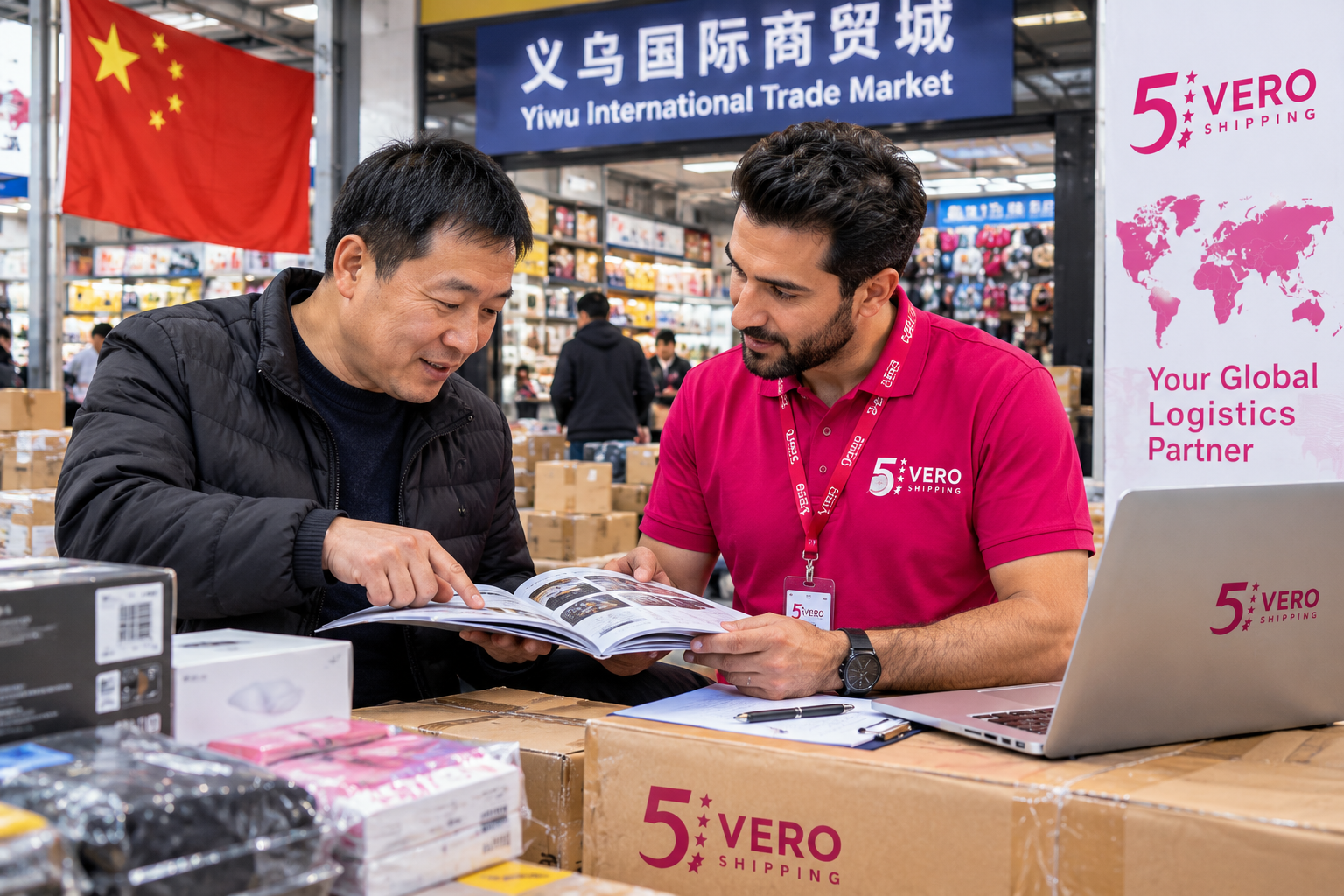
China LCL Shipping | How to Ship Small Cargo Without a Full Container
21 Oct 2026
Importing from China does not always mean filling an entire shipping container.
Many international buyers purchase commercial cargo that is too large or heavy for practical air freight but still does not require a full 20-foot or 40-foot container.
This is where China LCL shipping can become an important option.
LCL – Less than Container Load – allows smaller commercial shipments to move by sea without the importer booking an entire container exclusively for their cargo.
VERO Shipping supports international buyers sourcing products from China through cargo receiving, warehouse handling, consolidation, LCL and FCL shipping coordination, and international freight services to destinations worldwide.
This guide explains how LCL shipping from China works, when it may be suitable, what information is required for a quotation, and how buyers can prepare small cargo for international sea freight.
What Is LCL Shipping from China?
LCL shipping means Less than Container Load.
Instead of one customer using an entire shipping container, cargo from different shippers can be consolidated into a shared container for ocean transportation.
The individual shipment occupies only part of the container space.
This makes LCL different from FCL – Full Container Load, where the customer books the full container for their shipment.
A simplified LCL process may look like this:
Supplier → Receiving Warehouse → Cargo Preparation → LCL Consolidation → Shared Container → Destination
The exact process depends on the origin, destination, commodity, shipment size, carrier, consolidation schedule, and local handling requirements.
Who Should Consider LCL Shipping from China?
LCL can be useful for businesses that have commercial cargo but do not have enough volume to justify a full container.
Examples may include:
- Small and medium-sized importers
- Wholesalers testing new products
- E-commerce businesses
- Retailers ordering limited inventory
- Companies purchasing spare parts
- Businesses importing machinery components
- Buyers purchasing from several Chinese suppliers
- Companies that import regularly in smaller quantities
The important point is that LCL should not automatically be selected simply because a shipment is small.
The total cargo volume, weight, commodity, destination, urgency, handling requirements, and available freight options should all be considered before deciding.
LCL vs FCL Shipping from China
The basic difference between LCL and FCL is how container space is used.
LCL – Less than Container Load
The customer's cargo occupies only part of a container and moves within a consolidation arrangement.
FCL – Full Container Load
The full container is booked for one shipment.
FCL can become more practical as cargo volume increases, while LCL can provide an alternative when the shipment does not require an entire container.
However, there is no universal volume at which every shipment should automatically switch from LCL to FCL.
Freight rates, destination charges, cargo type, weight, handling, available container space, and current market conditions can all affect the calculation.
The correct comparison should therefore be based on the total logistics cost, not only the ocean freight figure.
How Is LCL Freight Calculated?
One of the most important measurements in LCL shipping is CBM – cubic meters.
CBM represents the amount of physical space occupied by the cargo.
To calculate the approximate volume of a carton:
Length × Width × Height = Volume
When dimensions are measured in meters, the result is expressed in cubic meters.
For example, if several cartons are being shipped, the volume of all cartons can be combined to estimate the total CBM.
But volume is not the only factor.
Cargo weight can also affect LCL calculations, particularly when the shipment is very dense or heavy.
This is why an accurate LCL quotation normally requires both dimensions and gross weight.
Why the Number of Cartons Is Not Enough
A buyer may ask:
"How much does it cost to ship 20 cartons from China?"
But the number of cartons alone does not provide enough information.
Twenty small cartons of clothing and twenty large cartons of furniture components could represent completely different shipment volumes.
For a useful quotation, buyers should provide:
- Number of cartons
- Dimensions of each carton type
- Gross weight
- Product description
- Supplier location
- Final destination
If you are shipping smaller commercial packages, our guide How to Ship Cartons and Packages from China Worldwide explains the information buyers should prepare before requesting international freight rates.
Can You Combine Several Suppliers into One LCL Shipment?
Yes, depending on the cargo and logistics arrangement, products from several Chinese suppliers can be received before being prepared for a combined international shipment.
For example, a buyer may purchase:
- Packaging from Supplier A
- Accessories from Supplier B
- Spare parts from Supplier C
- Commercial products from Supplier D
Instead of treating each purchase as a separate international shipment, the suppliers can deliver their cargo to an agreed receiving location in China.
Once the required goods arrive, the total volume and weight can be reviewed.
The cargo can then be prepared for the appropriate international freight method.
For businesses sourcing from multiple factories, see How to Combine Orders from Multiple Suppliers in China into One Shipment.
Why a China Warehouse Is Important for LCL Cargo
A receiving warehouse can play an important role before an LCL shipment leaves China.
Suppliers may complete orders on different dates.
The first supplier can deliver cargo while the buyer waits for another order to become ready.
Depending on the agreed service, warehouse support may include:
- Receiving supplier deliveries
- Recording incoming cargo
- Counting cartons
- Receiving photos or videos
- Temporary storage
- Consolidating supplier orders
- Repacking when required
- Labeling
- Palletizing when appropriate
- Preparing cargo for export handover
VERO Shipping's China logistics arrangement can provide up to 7 days of free warehouse storage, subject to the confirmed cargo and service terms. Storage charges may apply after the agreed free period.
For more information about receiving and handling cargo before export, read China Warehouse Services for International Buyers.
When Is LCL Better Than Air Freight?
Air freight and LCL sea freight serve different logistics requirements.
Air transportation can be attractive when the cargo is urgent and the shipment size makes air freight practical.
LCL sea freight can become attractive when the cargo is not urgent and the buyer wants to evaluate an ocean-freight solution without booking a complete container.
For example, a shipment may become too large for air freight to make commercial sense while still being far smaller than a full container.
In that situation, LCL may be worth evaluating.
However, buyers should compare more than the headline freight price.
LCL shipments can involve origin consolidation, handling, destination charges, and other services that should be included when comparing total costs.
For a broader comparison, read Air Freight vs Sea Freight from China | Which Shipping Method Is Better for Your Cargo?.
When Should You Consider FCL Instead of LCL?
As cargo volume increases, buyers should compare the LCL option with the cost of booking a full container.
FCL may become worth considering when:
- The shipment volume is large
- The cargo is particularly heavy
- Many suppliers are being consolidated
- The buyer has regular wholesale inventory
- The cargo requires more controlled loading
- The difference between LCL and FCL total cost becomes small
It is therefore useful to request a comparison when cargo approaches a volume where a full-container solution could become commercially reasonable.
The lowest rate per CBM does not automatically mean the lowest final logistics cost.
What Products Can Move by LCL from China?
Many types of general commercial cargo can potentially move through LCL services, subject to carrier, route, destination, packaging, and regulatory requirements.
Examples may include:
- Auto parts
- Machinery parts
- Tools
- Furniture components
- Textiles
- Clothing
- Household products
- Packaging materials
- Commercial equipment
- Building products
- Retail inventory
- Wholesale merchandise
Acceptance should always be confirmed before cargo is delivered for export.
Batteries, Liquids and Dangerous Goods in LCL Shipments
Not all cargo can be treated as ordinary general merchandise.
Products containing batteries, chemicals, liquids, aerosols, or other regulated materials may require additional review.
Examples include:
- Lithium-ion batteries
- Lithium-metal batteries
- Power banks
- Battery-powered electronics
- Certain chemicals
- Flammable liquids
- Aerosols
Depending on the commodity, additional documentation, packaging, labeling, dangerous-goods procedures, or carrier approval may be required.
The product should therefore be described accurately before booking.
Never describe regulated cargo simply as "electronics" or "general goods" if batteries or restricted materials are included.
Packaging Matters in LCL Shipping
LCL cargo can pass through several handling stages during consolidation and transportation.
Proper packaging is therefore important.
Cartons should be suitable for the product weight and the expected handling conditions.
Where necessary, cargo may require reinforcement, repacking, palletizing, or additional protection.
At the same time, unnecessary packaging can increase CBM.
A supplier using an oversized carton with large amounts of empty space can increase the shipment volume and potentially affect transportation costs.
The objective should be efficient and protective packaging.
Should LCL Cargo Be Palletized?
Palletizing can make certain shipments easier to handle and can provide additional organization or protection.
But palletizing also adds volume and weight.
It should therefore be considered according to the product, carton strength, handling requirements, destination rules, and freight arrangement.
Some cargo may benefit from pallets, while other shipments can move efficiently as properly prepared cartons.
The decision should be made before final dimensions and CBM are confirmed.
LCL Shipping from Guangzhou
Guangzhou is one of China's major commercial and sourcing centers.
It is also located close to important manufacturing areas including Foshan, Dongguan, Shenzhen, Zhongshan, and other parts of South China.
Buyers sourcing from several suppliers in this region can use a receiving and consolidation strategy before arranging international transportation.
This can be particularly useful when individual factory orders are relatively small but together create a meaningful commercial shipment.
For businesses purchasing in South China, read Guangzhou International Freight Services.
LCL Shipping from Yiwu and Other Chinese Sourcing Centers
Yiwu is another major sourcing center, especially for small commodities, accessories, household products, and wholesale merchandise.
International buyers may also have suppliers in Ningbo, Shanghai, Shenzhen, Foshan, and many other Chinese cities.
The best consolidation strategy depends on where the majority of the cargo originates.
Domestic trucking inside China should always be considered when planning the shipment.
Moving cargo a long distance simply to reach a particular warehouse can add unnecessary cost and time.
A good logistics plan considers both the international freight and the domestic movement required before export.
How Long Does LCL Shipping from China Take?
LCL transit time depends on the origin, destination, consolidation schedule, routing, carrier, transshipment arrangements, customs processes, and current operating conditions.
Buyers should also remember that ocean transit time is only one part of the complete logistics timeline.
The total process can include:
- Supplier delivery to the warehouse
- Waiting for other supplier orders
- Cargo receiving and preparation
- LCL consolidation
- Export handling
- Vessel departure
- Ocean transportation
- Destination handling
- Customs procedures
- Final delivery when required
For this reason, buyers should ask for the expected shipping schedule for their specific route rather than assuming one fixed transit time applies to every China LCL shipment.
Understand LCL Destination Charges
One of the most important points when comparing LCL quotations is understanding what the rate actually includes.
A very low ocean-freight figure does not necessarily mean the complete shipment will be cheaper.
Depending on the service and destination, additional charges may apply for handling, documentation, consolidation, deconsolidation, customs procedures, terminal services, storage, or final delivery.
Before choosing a quotation, ask:
- What origin services are included?
- Is warehouse receiving included?
- Is consolidation included?
- What freight charges are included?
- What destination charges apply?
- Is customs clearance included?
- Is final delivery included?
Compare quotations based on the same scope of service.
How to Request a China LCL Shipping Quote
To receive an accurate quotation, send complete cargo information.
Include:
- Supplier city or pickup address
- Product description
- Number of suppliers
- Number of cartons or packages
- Dimensions of each carton type
- Gross weight
- Total CBM if available
- Photos when useful
- Battery or dangerous-goods information
- Cargo readiness date
- Destination country
- Destination port or city
- Whether supplier pickup is required
- Whether warehouse receiving is required
- Whether consolidation is required
- Whether customs clearance or final delivery is required
The more accurate the information, the more accurately the shipment can be evaluated.
China LCL Shipping to the UAE
Businesses importing smaller commercial cargo from China to the UAE can evaluate LCL alongside air freight and full-container shipping depending on the shipment size and urgency.
Buyers purchasing from multiple suppliers may also use receiving and consolidation before the international shipment is arranged.
For the dedicated UAE route guide, see Shipping from China to UAE | Air, Sea Freight & Cargo Consolidation Guide.
China LCL Shipping to Iraq
Iraqi importers purchasing smaller commercial quantities from Chinese suppliers can also evaluate LCL as part of their shipping strategy, depending on route availability, cargo type, volume, and destination requirements.
For larger or urgent shipments, air freight or full-container shipping may be more appropriate.
The best solution should be selected after reviewing the complete cargo details.
For our dedicated Iraq guide, read Shipping from China to Iraq | Air & Sea Freight, Warehousing & Consolidation.
LCL Shipping for E-Commerce Businesses
E-commerce sellers often begin with smaller inventory orders.
Air freight may work well for early product testing or urgent replenishment.
As sales increase, the quantity purchased from China may become too large for air freight to remain the preferred option but still not large enough to fill a container.
This is where LCL can become part of a growing e-commerce supply chain.
Later, if purchasing volume continues to increase, the business can compare LCL with FCL.
The shipping method can therefore evolve as the business grows.
LCL Shipping for Wholesalers
Wholesalers can also use LCL strategically.
A company does not always need to wait until it has enough cargo for a full container.
If inventory is needed earlier, a smaller consolidated shipment may be considered.
At the same time, regular wholesalers should continuously compare their LCL volume with FCL options.
As purchasing grows, there may be a point where full-container shipping becomes more practical.
Common Mistakes When Shipping LCL from China
Several mistakes can make LCL shipping more difficult or expensive than expected.
These include:
- Requesting a quotation without carton dimensions
- Providing estimated rather than confirmed weight
- Not declaring batteries or regulated products
- Ignoring destination charges
- Comparing quotations with different service scopes
- Using oversized packaging unnecessarily
- Sending supplier cargo before confirming warehouse instructions
- Failing to label cargo correctly
- Waiting until the last moment to organize several suppliers
- Choosing LCL without comparing FCL when volume becomes large
Good shipment information and early planning can prevent many of these problems.
How VERO Shipping Can Support China LCL Cargo
VERO Shipping can coordinate different stages of the China shipping process according to the customer's requirements.
Services may include:
- Supplier delivery coordination
- Cargo receiving in China
- Warehouse handling
- Receiving photos and videos
- Temporary storage
- Multi-supplier consolidation
- Repacking when required
- Labeling
- Palletizing
- LCL shipping coordination
- FCL shipping coordination
- Air-freight alternatives
- International freight coordination
The objective is not simply to place cargo inside a shared container.
The objective is to choose a shipping structure that makes sense for the shipment's volume, weight, commodity, destination, urgency, and commercial requirements.
Is China LCL Shipping Right for Your Cargo?
LCL can provide an important middle ground between small air-freight shipments and full-container ocean shipping.
It can be useful when a business has genuine commercial cargo to ship but does not need an entire container.
However, the correct decision should always be based on the complete shipment.
Start by confirming the cargo dimensions, gross weight, CBM, commodity, supplier locations, and destination.
If several suppliers are involved, organize the cargo before international shipping.
Then compare the available options – air freight, LCL sea freight, and FCL – based on the complete logistics cost and required delivery schedule.
For additional China logistics information, explore our guides on Multi-Supplier Consolidation, China Warehouse Services, Air Freight vs Sea Freight from China, and Shipping Cartons and Packages from China Worldwide.
Small cargo does not always need a full container. Receive in China, consolidate when needed, compare LCL with other freight options, and ship worldwide with VERO Shipping.


